Counseling practices
Websites for counseling practices
People looking for a counselor often read the whole site before they feel ready to call. A counseling website should answer the quiet questions first: how the first call works, what a session costs, which states online sessions cover, and where to turn in a crisis. This page sets out those pages, with two ClinicBuilds concept sites.
The page set
The pages counseling patients look for.
Each page answers a question patients would otherwise phone the front desk to ask.
-
Start here: the free fit call
People choosing a counselor are choosing a person, and a short call to check fit is the usual first step. The page says who calls back, how long the call lasts, that no forms come first, and what happens after. The counselors’ code of ethics says clients need adequate information about the counseling process before they begin. [1]
The front-desk view: Fewer “How does this work?” and “Do I have to commit to anything?” calls, and fewer long first emails.
-
Fees and reduced-fee spots
Cost is the question people are most shy about asking aloud. The page gives the session fee and length, or says when fees are shared, and whether reduced-fee spots exist. The counselors’ code allows fees to be adjusted when the usual fee would cause undue hardship. [1]
The front-desk view: Fewer “How much is a session?” calls, and people who need a reduced fee know to ask.
-
Insurance, out-of-network benefits and superbills
Many clients ask whether they can use their insurance when a practice is out of network. The page lists any in-network plans, explains out of network in plain words, and says whether the practice provides a superbill the client can send to their plan.
The front-desk view: Fewer “Do you take my insurance?” calls that turn into a benefits lesson, and fewer “What is a superbill?” emails.
-
The Good Faith Estimate notice
Clients who are uninsured, or who choose not to use their insurance, have a right to a Good Faith Estimate, and the notice must be easy to find on the practice’s website. The counseling association’s guidance says licensed counselors in clinical settings are covered, and weekly sessions can share one estimate. [3]
The front-desk view: One page to point to, and one process to follow, when cost questions come in.
-
Cancellation and late-cancel policy
Sessions are reserved hours, so a missed session is time a counselor can’t fill at short notice. A short, kind policy states the notice period, whether a fee applies and how to cancel, so clients see it before the first session. Fees for no-shows and cancellations are among the costs clients must understand. [3]
The front-desk view: Fewer “What if I need to cancel?” calls and fewer disputes over late-cancel fees.
-
Online sessions, and which states
Telehealth is part of most counseling practices, and the client’s location matters as well as the counselor’s. The page says which states each counselor can see clients in online, and what happens if someone moves or travels. Interstate rules are changing, so it avoids listing them. [1]
The front-desk view: Fewer “I live in another state; can I still see you online?” calls, and fewer intakes stopped halfway.
-
Counselors: focus areas, approach and license-board links
Clients pick a person, so each counselor needs a section with their license type written out, who they work with, how they work and the languages they offer. The counselors’ code also asks those who keep a professional website to link to the relevant licensure boards. [1]
The front-desk view: Fewer “Who should I see for couples work?” calls, and new clients routed to the right counselor before the fit call.
-
Crisis notice: 988, and not for emergencies
A counseling site can be read by someone in crisis late at night. A short notice near every contact option says the practice can’t respond to emergencies through the site or email, and gives the 988 Suicide and Crisis Lifeline, which offers free, confidential support at any hour. [5]
The front-desk view: Urgent messages are not left in an inbox or voicemail until morning.
-
A contact path that asks for no clinical details
People often want to explain everything in the first message. The form asks only for a first name, a way to call back and perhaps a preference for in-person or online sessions, with a line asking them to keep personal and health details for the call. Intake happens later, in the practice’s own secure system. [1]
The front-desk view: Sensitive details stay out of an ordinary inbox, and every enquiry gets the same reply: a call back.
Concept sites
Two counseling concept sites.
These are concept builds made to show what ClinicBuilds can create for each specialty. The practices, people, and details are fictional.
-
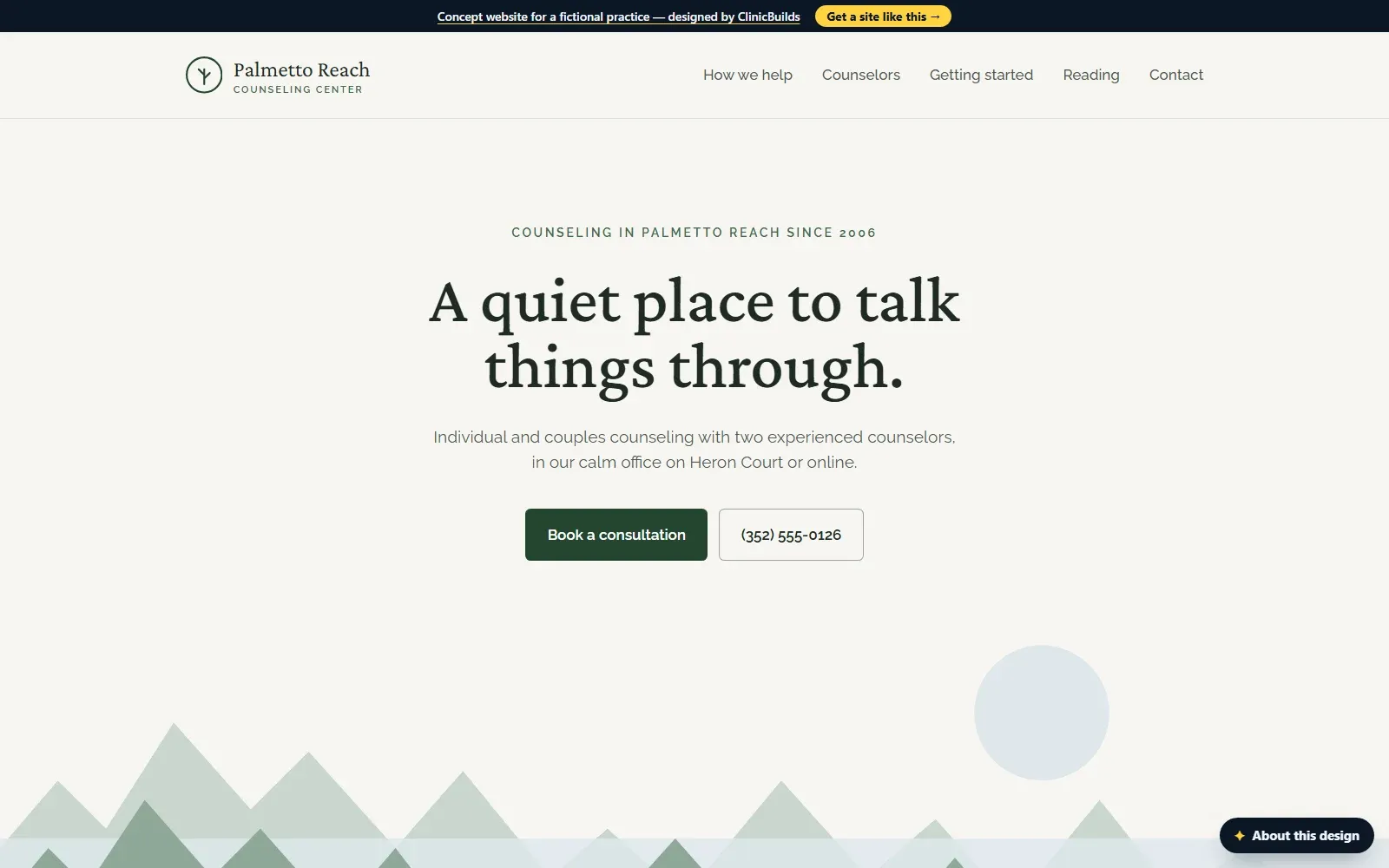

Concept site — fictional practice
Palmetto Reach Counseling Center
Counseling · Established practice
- The new-patient steps start with a free 15-minute fit call and end with the client deciding whether and how often to continue.
- The contact form asks only for a first name, a way to reach the person and an in-person or online preference, and says not to share health details.
- A crisis line sits beside the contact options.
-
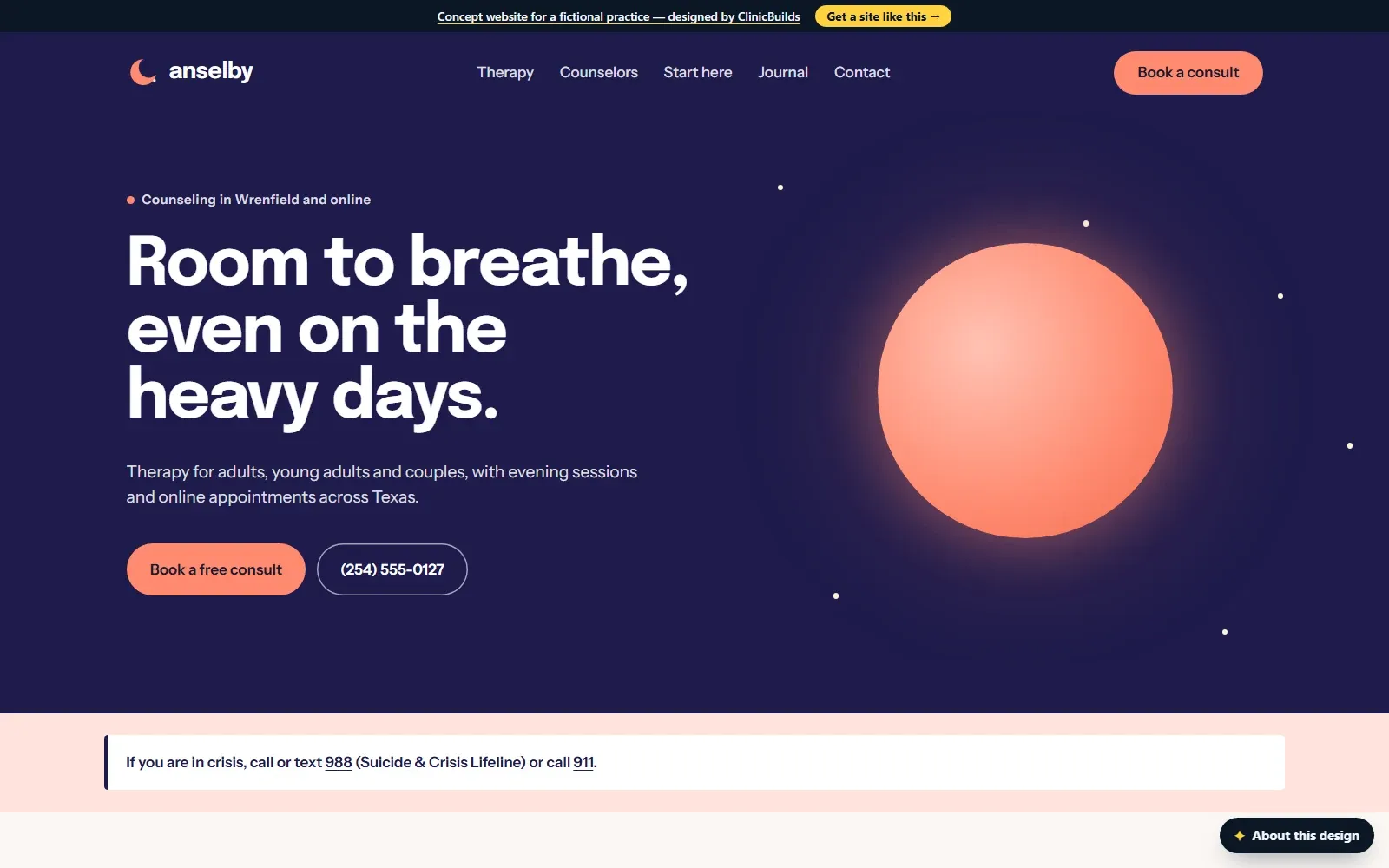
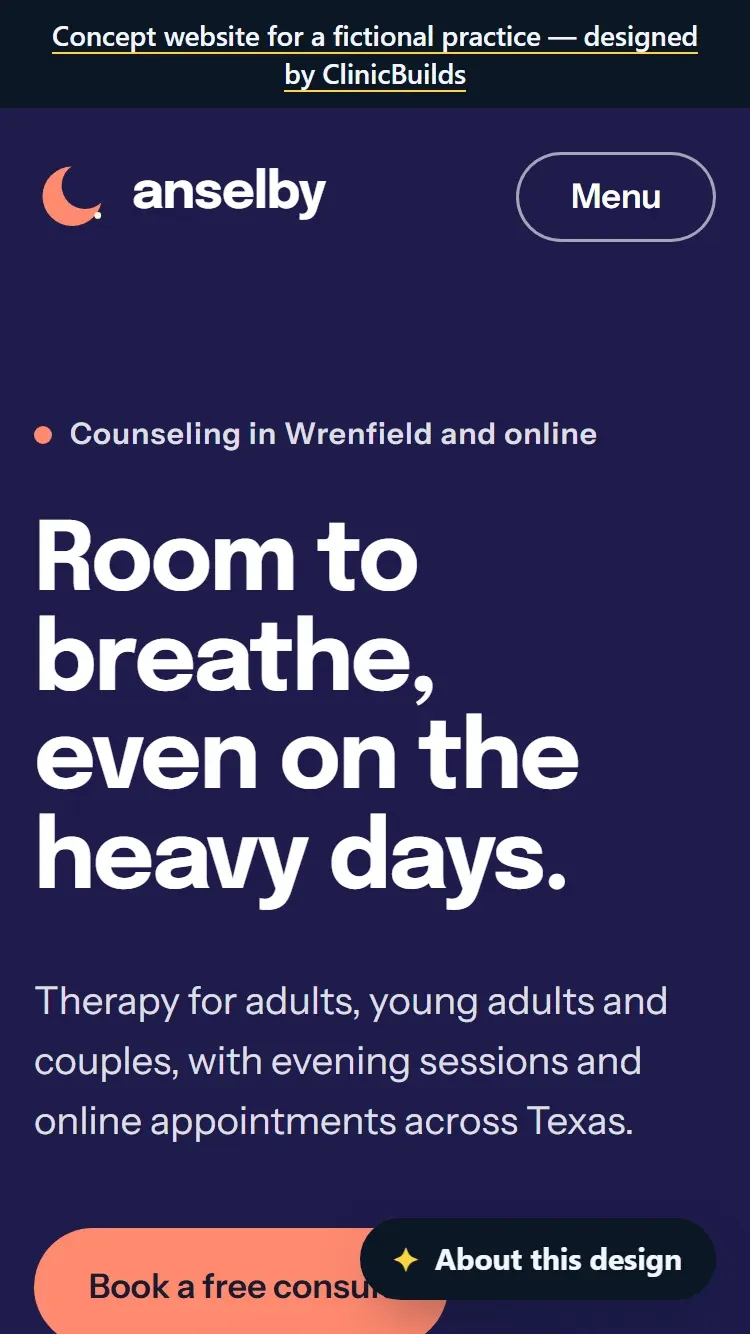
Concept site — fictional practice
Anselby Counseling
Counseling · New practice
- Each counselor card has an “Ask me about” list, and the first step offers to match the client with a counselor.
- The start-here questions cover when fees are shared, reduced-fee spots for students and a 24-hour cancellation request.
- Sessions in Spanish are offered as their own service, and online sessions run on Saturday mornings.
Questions
Questions counseling practices ask.
- “Should You List Your Fees on Your Practice’s Website?”
- Either choice can work, but the site should say which: the fee and session length on the page, or a clear line that fees are shared on the first call. Say whether reduced-fee spots exist, and keep the Good Faith Estimate notice next to the fees.
- “What is a superbill for therapy?”
- It is a detailed receipt a client can submit to their own insurance for out-of-network reimbursement. If the practice provides one, the insurance section should say so in a sentence, so clients stop asking by email.
- “Do I need to inform clients of the availability of a good faith estimate?”
- The counseling association’s guidance says licensed counselors in clinical settings are covered by the rule, and the notice must be on the practice’s website. The site’s part is to post it where fees are discussed and make it easy to find.
- “Trying to set up a home-based telehealth business without a disclosing home address.”
- The website can say sessions are online-only and name the states they cover, with no street address. The Google Business Profile has its own verification rules for home-based and online practices, which the practice sets up separately.
- “Therapists can’t respond to reviews due to ethics code”
- That is one reason a counseling site should not lean on client quotes or review widgets. The counselors’ code limits asking clients for endorsements, so the site can lead with each counselor’s own words and a clear first step instead. Check your own code and board.
Building it
What a ClinicBuilds new website includes.
- Custom design for the practice (not a template)
- Up to 8 pages
- Mobile-first, fast-loading build
- On-page SEO basics: titles, descriptions, structured data, sitemap
- Click-to-call and a link to the practice's existing online scheduling (if any)
- Google Business Profile link-up
- 30 days of post-launch fixes
A new website starts from $2,499 one-time. You get a fixed quote before any work starts.
The Good Faith Estimate rule, interstate licensing and the counselors’ code of ethics all change over time; the Counseling Compact’s list of live states changes as states join. A practice’s pages on them should link to the official source and be reviewed when the rules change. This is general information, not legal advice.
Sources
Get started
Want a site like this for your counseling practice?
Get a free, no-obligation review of your practice's current online presence. Replies within one business day.